
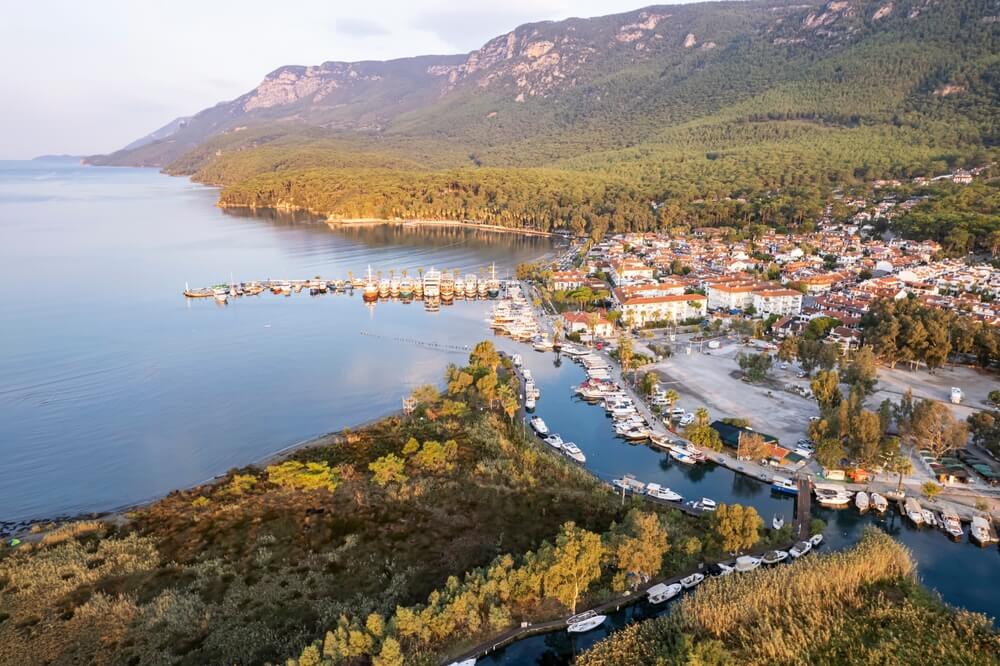
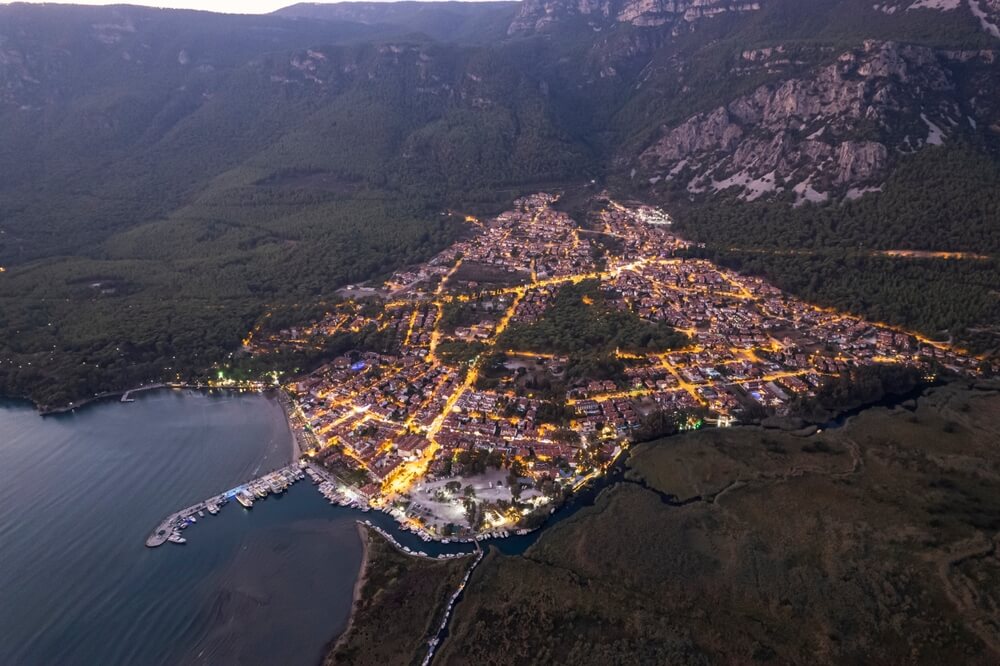
Located in the north-eastern part of the Gulf of Gökova, one of the most interesting regions of Muğla province, the town of Akyaka was once the ancient city of Idyma, founded by the Carians about 2,600 years ago. Akyaka has a Mediterranean climate with mild winters and warm summers. On average the hottest month is July, around 30°C, and the coolest is January, around 10°C. In summer the sea temperature usually exceeds 20°C, and the swimming season typically starts in May and runs through the end of October.
As early as the 5th century BC, Idyma joined the Delian League, founded under the leadership of Athens to resist Persian rule in Anatolia, and began paying a regular tribute to the alliance. This shows the city's important place in the history of the region. During this period, Idyma's coins bore images of the Greek god Pan and a fig leaf. By the end of the 5th century BC, the city was excluded from the league and its name appears less and less often in tax records, so very little is known about the period up to the Roman era.
Meanwhile, under the influence of the rivalry between Athens and Sparta, the region of Caria in Anatolia passed back and forth between Athenian and Spartan control. At the end of the 1st century BC, traces of the Roman period appear around Idyma, though it is not entirely clear whether Idyma was part of the Rhodian Peraia or under direct Roman rule. The latest archaeological finds in the Gökova area date to the 4th–3rd centuries BC. In the mid-3rd century the Roman Empire weakened, bringing unrest, epidemics, and severe earthquakes. The city gradually lost importance and its population declined. Because of destruction caused by both people and nature, little is known about the Roman and later periods. The most notable monument of this period is the medieval fortress on the hilltop.
In the Middle Ages, in the 13th century, Turks raiding into Western Anatolia took the region. It first became part of the Menteshe Beylik, and in 1420 part of the Ottoman Empire.
Today the ruins of the ancient city of Idyma stretch from the village of Gökova to the foot of Mount Kiran on the road to Akbük. The ancient city's territory includes Akyaka, Gökova, the Inişdibi area, and the section where the medieval fortress stands.
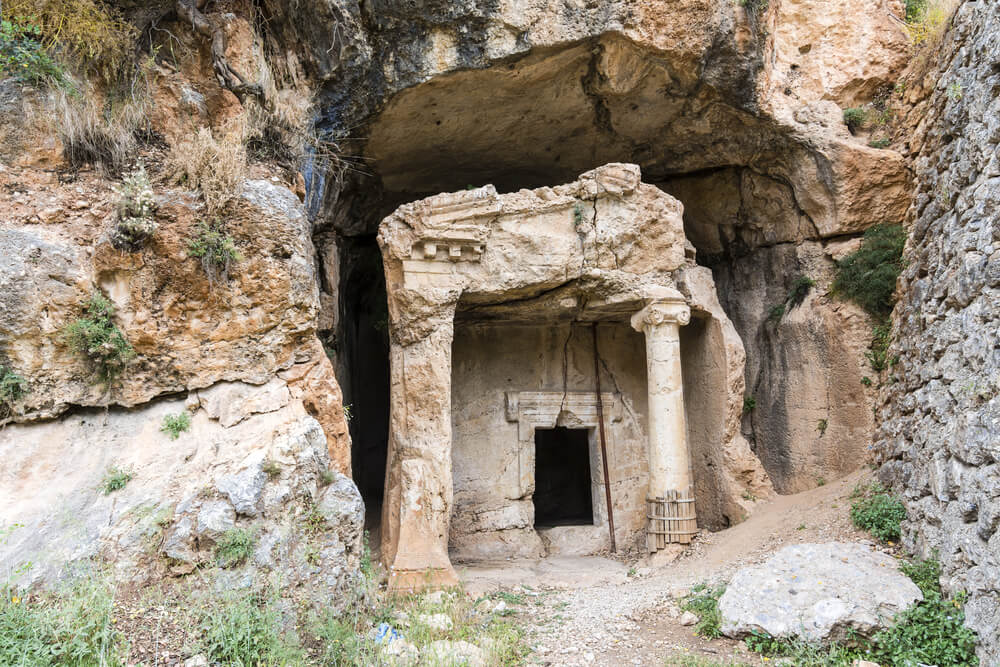
On the hill north of the village of Gökova you can see the ruins of an acropolis dating to the 4th–3rd centuries BC. On the eastern slope of the same hill lies the necropolis. The tombs carved into the rocks reflect residents' belief in the afterlife. Best preserved are the monumental rock tombs, clearly visible along the road between Akyaka and Gökova in the Inişdibi area — they speak to the high level of socio-economic development of Idyma's inhabitants. Along the same road, on the banks of the Azmak river, you can see the Byzantine Idyma fortress, where excavations continue today.
Akyaka, inhabited since deep antiquity and home to many civilisations, began to take shape as a modern village in the 1970s. As people from neighbouring provinces and big cities moved in, the region became better known and tourism gradually began to develop.
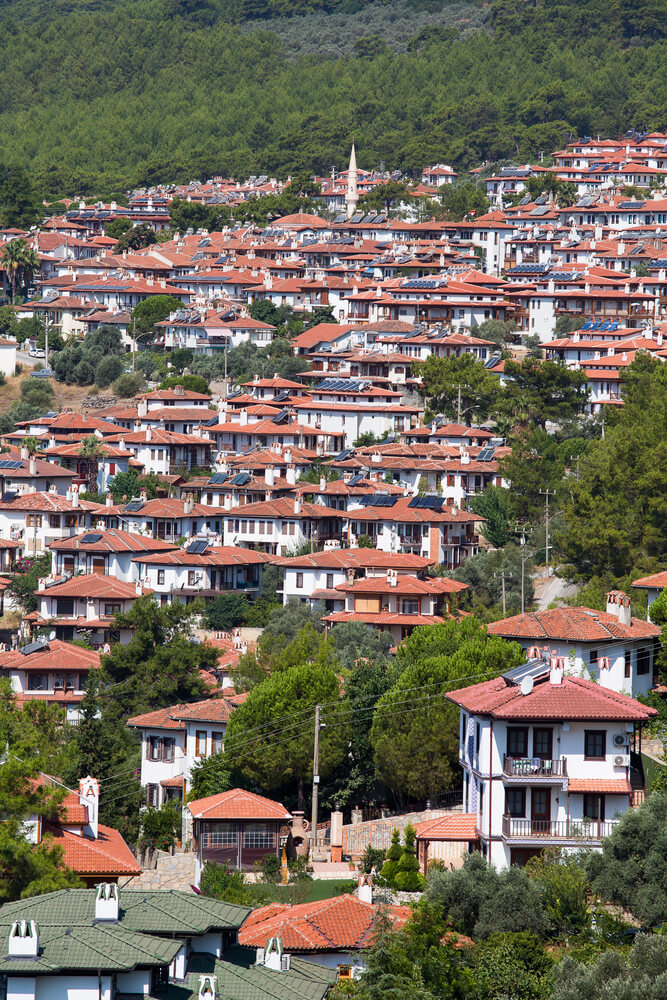
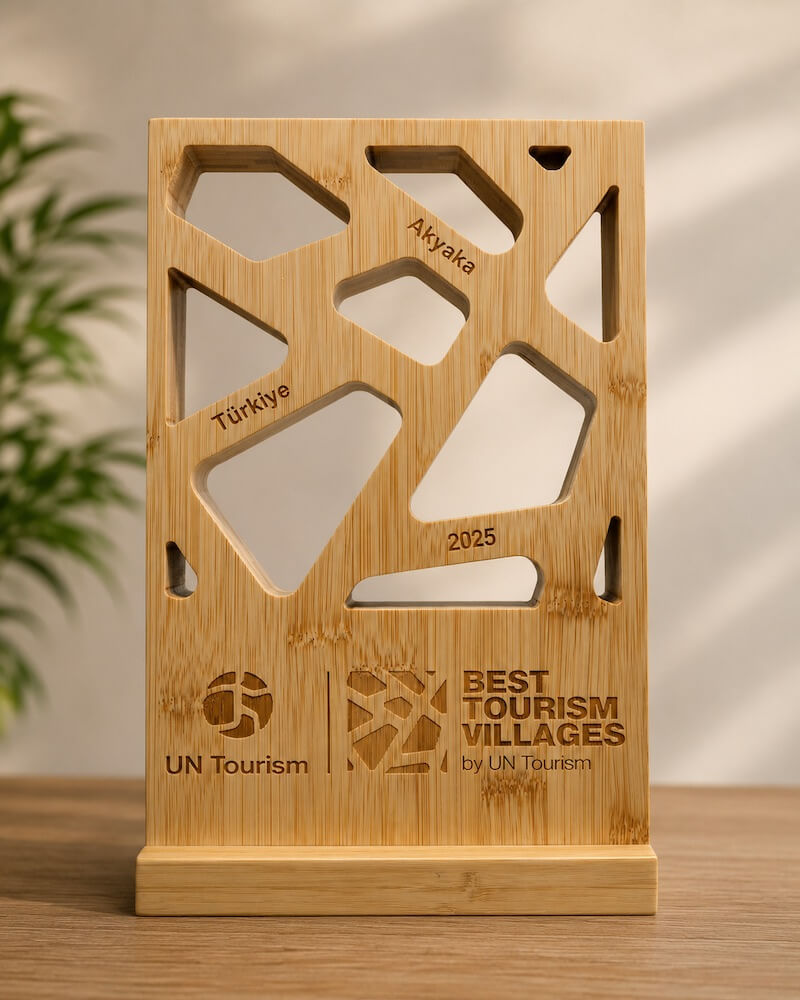
In 1988, Akyaka was granted the status of a protected area. The town managed to preserve its appearance thanks to a ban on high-rise construction and uniform architectural standards, and in 2011 it was included in the international network of "slow cities" Cittaslow. In 2025, Akyaka was awarded the title of "Best Tourist Villages" by the United Nations World Tourism Organization.
In recent years Akyaka has become one of the main kitesurfing spots in Turkey, well known beyond its borders.

 FAQ
FAQ